Guns, veils, unwavering stares: the forbidden book about Iran's female rebels

‘We shall rise again’ … Shirin Neshat’s Rebellious Silence, with a poem as a veil. Photograph: © Shirin Neshat Courtesy of the artist and Gladstone Gallery
With her images of the valiant ladies who had survived Iran's revolution three decades before, Shirin Neshat enraged the Iranian leadership. They were defiant, much like the courageous Mahsa Amini demonstrators of today
A lady with a chador and holding a rifle barrel up to her face peers out at us. She is obstinate, resolute, militant, and bold. Rebellious Silence, the title of the piece, alludes to her subtle feeling of authority. Her unwavering stare conveys conviction and faith. A feminism-focused poem written in hand-drawn Farsi and painted on her face refers to the rules passed after the Iranian revolution of 1979, which still call for all Iranian women to cover their faces in public. Shirin Neshat, the artist, said that "the written text is the voice of the photograph." It interrupts the calm woman's quiet.
Neshat returned to Iran in 1990 after spending 11 years apart from her family while living in exile from her own country. When the Islamic revolution was just getting started, she had fled as a teenager and pursued her education in the US. Her nation had changed when she got back.
"We are not scared. We are outraged. People think that we’re going to just stop. We are not going to stop"
Neshat turned to her camera in an effort to learn more about the experiences of the women who participated in the revolution and helped to create it, as well as to establish an emotional and cultural connection to her roots. She acquired her information via interviews, reading, and conversations with friends to create two potent photography series: Unveiling (1993–2004) and Women of Allah (1993-7).
Neshat focused on a group of pious women who become "voluntarily militant" after the revolution. Her photographs sparked a conversation on how women should be seen in relation to their bodies, the rejection of western imperialism, and the concept of martyrdom. The outcomes are rife with paradoxical imagery, including violence and femininity, dominance and submission, politics and religion, and love and death. Neshat said that "women of Allah" questioned how such ladies could stand at the confluence of cruelty, bloodshed, and death while yet demonstrating love, faith, and devotion.
Her breakdown of its components was as follows: "The weapon suggested the violence that came with the Islamic regime; the veil, both as a symbol of repression, for those who oppose mandatory hijab, and submission, for the extremely religious women."
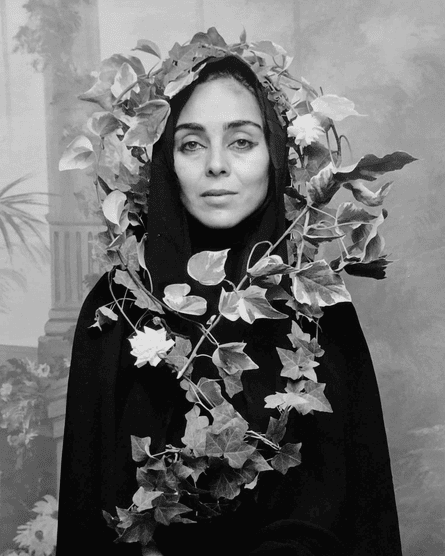
Contradictory symbols … an untitled portrait from Shirin Neshat’s Women of Allah series. Photograph: Courtesy the artist and Goodman Gallery
The piece puts to light the lengthy and ongoing arguments about the control of women and how they dress by those in power by exploiting the female body, which, in Neshat's words, has been "used as a battleground for men's religious and ideological rhetoric." Women were forcibly exposed during Reza Shah's rule from 1925 until 1941. After the revolution of 1979, rules requiring the hijab were implemented. They are demonstrating fiercely right now.
Following the passing of Mahsa Amini, hundreds of demonstrations have broken out in Iran's streets over the last several weeks. She was a healthy 22-year-old lady who was stopped by the morality police for donning her hijab in a "improper" way while visiting Tehran with her family. After being brought to a detention facility, Amini passed away three days later while still being held by the police under mysterious circumstances.
Women in Iran and throughout the globe have been bravely cutting their hair, pulling off their headscarves, burning their hijabs, and organizing protests in solidarity with Amini. Videos of one of the most historic revolutions for women in modern history have been making the rounds on social media while the Iranian government has blocked internet access. These recordings also expose the horrifying abuse, terror, and violence meted out to demonstrators.
The bravery is astounding. We are not terrified, a demonstrator who declined to be identified said on CNN. We are indignant. People assume that since we are the older generation, we will just stop if they do this. There will be no stopping us. For us, this is a one-way street. More individuals will be arrested, tortured, and raped by them. There is yet hope.
"It became very controversial and the government attacked it"
While the inspiration for Neshat's series came from the ladies involved in the revolution in 1979, their gaze reflects the tenacity of today's demonstrators. Iran's conservatism is evident from the fact that the work is forbidden there. The Women of Allah series "became very controversial shortly after I made it," according to Neshat. It was deemed critical by the administration, who labeled it anti-revolutionary. I was told not to come back.
The poem Allegiance with Wakefulness by Tahereh Saffarzadeh is inscribed on the woman's face in Rebellious Silence in hand-drawn Farsi. With the help of her striking photographs, the text "O, you martyr, / hold my hands / With your hands / Cut from earthly means / Hold my hands, / I am your poet. / With an inflicted body. / I've come to be with you / and on the promised day, / We shall rise again" speaks to the bravery of women in the 1979 revolution just as much as it does to those protesting today.
Thanks to Katy Hessel at The Guardian whose reporting provided the original basis for this story.


