Ode to Art Rosenbaum

Folklorist, artist, and musician who warmly and tenderly captured classic American music
Art Rosenbaum sought out old southern banjo styles. Photograph: Margo Newmark Rosenbaum
Americans who were interested in their regional music in the late 1950s and early 1960s started to visit the locations where it was generally produced, bringing tape recorders with them. Some people pursued this as a completely personal endeavor, while others received little funding from folk music record labels to extensively tape their findings. Artists like the blues musicians Fred McDowell and Robert Pete Williams, the old-time singer, banjoist, and guitarist Roscoe Holcomb, as well as "rediscovered" figures from the record catalogues of the 1920s like Dock Boggs, Clarence Ashley, and Furry Lewis, came into being as a result of this field recording ferment.
John Cohen, Mike Seeger, Sam Charters, Chris Strachwitz, George Mitchell, David Evans, and - perhaps the most diversely talented of all of them - the song collector, musician, writer, painter, and teacher Art Rosenbaum were some of the wandering recorders who saved these musicians from obscurity and helped them reach a new audience.
Art, who passed away at the age of 83, had an endless supply of curiosity. He first heard the songs of migrant laborers while working a summer job in Michigan as a youngster, and after recording them, he realized this was more than just a pastime: "Along with being a passionate enthusiast for the type of music I loved, I was a documentarian."
A few years later, while still residing in Indianapolis, he met Scrapper Blackwell, a guitarist best known for his work on successful blues recordings with vocalist and pianist Leroy Carr. In 1961, the folklorist Kenneth Goldstein, in head of Prestige Records' Bluesville label, commissioned Art to record five LPs by Indianapolis blues artists after Blackwell introduced him to other performers.
Blues wasn't Art's only passion. He also captured John W. Summers, a superb old-time violinist, when he was in Indianapolis. Then, he sought out players of traditional southern banjo styles, including Buell Kazee and Bascom Lamar Lunsford, and transmitted their music in the instruction book Old-Time Mountain Banjo (1968) and the solo album Five String Banjo after being inspired, like so many of his generation, by Harry Smith's 1952 LP collection Anthology of American Folk Music (1973).
Art Rosenbaum was an accomplished artist, and professor of fine arts at the University of Georgia at Athens. Photograph: Dust-to-Digital Records
The oldest child of Della (née Spark) and David Rosenbaum, Art was born in Ogdensburg, New York. He was raised in Indianapolis, where his father was a doctor at the Veterans Administration hospital. He completed his studies at Columbia University in New York, where he also earned a master's degree in painting. He accepted a position teaching art at the University of Iowa in 1973, when he met Harry Oster, a renowned field recorder who had discovered incredible blues and gospel singers in Louisiana's swamps and prisons.
Art relocated to the University of Georgia in Athens in 1976, where he spent 30 years as a professor in the Lamar Dodd School of Art. He was the institution's first Wheatley professor of visual arts. Margo (née Newmark), his wife whom he had married in 1966, and he resided outside the city in an old ranch home filled with paintings and banjos. She was also a talented photographer, painter, and musician who worked with them on all of their projects.
No matter where he went in Georgia, Art was able to find music to record, whether it was the old-time string band led by fiddler Gordon Tanner, a descendant of the famous record producer Gid Tanner from the 1920s, the banjo songs of the "outsider artist" Howard Finster, or the McIntosh County Shouters' rendition of black "ring shouts."
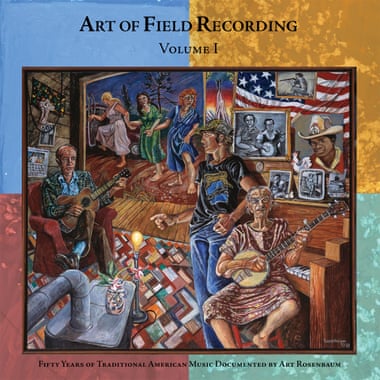
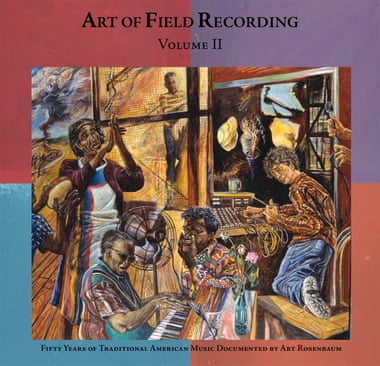
The Dust-to-Digital box set Art of Field Recording, volume I, which collected material from more than fifty years and included his drawings, paintings, and Margo's photography, honored his contributions in 2007. The collection received the Grammy Award for best historical album in 2008, and a second volume was released after it. The diversity of the more than 200 recordings shows the depth of Art's passion with traditional music: old-world ballads, religious music from many southern faiths, dance music, blues - music both professional and amateur, public and private.
“Art was on a mission to go out and meet people who made music,” said Lance Ledbetter of Dust-to-Digital Records. “He recorded their songs, learned them on his banjo, became their friend, painted them in his murals, and invited them to perform at art galleries, museums, concert halls and folk festivals. His mind contained a database of vernacular music but, unlike an algorithm, when Art recalled particular songs or tunes, he did so with warmth and tenderness, drawing from memories of the people who taught them to him.”
Shout Because You're Free: The African American Ring Shout Tradition in North Georgia (1998), Folk Visions and Voices: Traditional Music and Song in North Georgia (1983), and further teaching manuals for banjo playing are among Art's publications. Weaving His Art on Golden Looms, a retrospective of his paintings and sketches, took place in 2006 at the Georgia Museum of Art.
Margo and Neil, their son, as well as his siblings Jenny and Victor, remain in his life.
Folklorist, painter, and musician Art (Arthur Spark) Rosenbaum was born on December 6, 1938, and he passed away on September 4, 2022.
Thanks to Tony Russell at The Guardian whose reporting provided the original basis for this story.


